Showing posts with label Photography Tips. Show all posts

Lighting Techniques for photography tips and trick

How to shape light using Para lights by Karl Taylor

Lighting Techniques for photography tips and trick by karl taylor. On this occasion, I travel to Broncolor’s studio in Switzerland and meet up with Urs Recher (Bron's in-house photographer and consultant) to shoot the latest in this series of photography training videos.

Our model Sharon is wearing white against a white background for this “How To” video. We demonstrate the versatility of the Broncolor’s Para 222 with a selection of the many types of shot that can be achieved using this amazing light.


In this interview for broncolor lighting, Karl Taylor talks about his techniques and equipment for creating his images:

Lighting Techniques Interview with Karl Taylor - Part 1


Lighting Techniques Interview with Karl Taylor - Part 2


Lighting Techniques Interview with Karl Taylor - Part 3


[read more]

Beginning Digital Photography Tips

Video Beginning Digital Photography Tips

This is the trailer for our Introduction to Photography DVD. Part out our Photography Masterclass DVD series.

Recommended Product

Canon PowerShot A2500 16MP Digital Camera with 5x Optical Image Stabilized Zoom with 2.7-Inch LCD (Black) $ 109.00 The Canon PowerShot A2500 Compact Digital Camera makes highly advanced imaging technology fun and easy to use. The 16.0 Megapixel sensor and DIGIC 4 Image Processor capture a wealth of detail and natural color so even your enlarged images have impres... ▶ Kodak EasyShare C1530 14 MP Digital Camera with 3x Optical Zoom and 3.0-Inch LCD (Black) $ 69.95 Kodak C1530 Digital Camera. Overview: Loaded with features like Smart Capture, 3X zoom, video mode and our exclusive Share button, the Kodak C1530 makes it simple to capture and share all of your favorite moments. Simply... ▶ Nikon COOLPIX L820 16 MP CMOS Digital Camera with 30x Zoom Lens and Full HD 1080p Video (Black) $ 279.95
Powerful 30x zoom that lets you shoot amazing close-ups 16 MP CMOS sensor for exceptional image quality and enhanced low-light performance Record videos in Full 1080p HD with stereo sound Larger ergonomic design for easier handling and comfort...
[read more]

DSLR Camera Canon EOS Rebel SL1/100D 18MP APS-C

DSLR Camera Canon EOS Rebel SL1/100D 18MP APS-C

hired someone from review and i'm here with the canon deals rebel estelle one
wing in only fourteen ounces cannon is doing this camera as the world's smallest and lightest DSLR that's so one features the touchscreen capabilities that we saw in the chief or i videos m


you can manipulate menu settings in-camera options simply by touch of course in the SL1 100D the screen is fixed unlikely articulated screen in eighty four i that's so one features version two of cannons hybrid air system.

More Buying Choices:
Canon EOS Rebel SL1/100D 18MP APS-C

unlikely psalm thirty four a and eighty s and this version offers much greater
coverage the hybrid a half now covers eighty percent of the liberia canon isn't however making any greater claims for faster focusing speed camera has a nine-point air system although only the center point is of the cross-eyed co announced along with the SL1 is cannons new the f s 18 to 55 f 3.52 56 and lands.

ISO 100 F/. 2.8 used Canon 40 mm lens A+ mode. What a sad face.

expanding the company's sdn line of lenses for fast silent autofocus during video shooting Canon EOS Rebel SL1/100D. The SL1 hasn't (18MP) eighteen megapixel sensor and uses the digit five process we've seen in previous cans which should give its similar if not identical image quality to what we found in the canon rebel team for our.
 
[read more]

Best Canon Powershot for Travel Scenery Shots

For those of you who like the streets, aka the traveler pocket camera is perfect for you with some reason. First, the price is much cheaper than DSLR cameras. Second, no need to bother Petite, small in size so pretty in your pants pocket. Third, it is very mild compared with DSLR cameras.
Currently the majority of camera manufacturer issued a pocket camera with a range of product variants and technology. Starting from the brand of Sony, Samsung, Kodak, Canon, Nikon and other them. There are cheap below 1 million, there is also a kayak that is priced DSLR cameras. Ehm, of the many pocket cameras, how do you choose a pocket camera that suits you? Don't rush past, choosing pocket camera is first to understand the ins and outs of pocket cameras in General.
An overview in General, you should be aware of the pocket cameras are:

Lens: you have to know how wide a lens pocket camera that belongs to. pocket camera that has a minimum width of 24 mm lens is ideal.

Resolution: how many megapixels the camera abilities paperback? The resolution was indeed supporting the quality of the photos, but keep in
mind: Pocket Camera with high resolution is not always better than a camera with lower resolution.

memory card: the average pocket camera uses SD cards, but there are a few brands that use a special memory card.
How long is the battery endurance: batereinya and you have to know how much battery backup.
Brand reputation: search first if tau si doi expert in terms of per-Pocket 's.

Warranty: find out how long the warranty and warranty disclaimer terms & pahamin.

Body: FAT or slim down depends on taste. More and more flexible naruhnya slender in his pocket. Usually the pocket camera body fat have a more feature complete.

The following are some options of the camera that you can purchase:

Options one for Point-and-Shoots
Pros: Cheap, easy to use, lightweight
Cons: Mostly automated, struggle with large prints 
Things to Remember: Don’t be overwhelmed by features—focus on fundamentals like megapixels, zoom, battery life, cost, and reputation


Price Range: $70-$650
Top High-End :>> Sony DSC-RX100 ($648), >>Canon Powershot S110 ($336)
Top Superzoom :>> Sony Cyber-shot HX200V ($348), >>Nikon COOLPIX P510 ($315)
Top Budget :>> Nikon COOLPIX S9200 ($149)


Options two for Entry-Level DSLR Cameras 2013
Pros: Less automation (more room for creativity), professional grade image quality, great for large prints
Cons: Less automation (more room for user error), size and weight, cost
Things to Remember: Get to know the camera before your trip by reading the manual and going out for some test shoots. Many digital SLR’s have automated settings such as ‘landscape’ and ‘portrait’ but you will want a baseline of familiarity


Price Range: Budget DSLR camera/lens kits start at around $500; high-end set-ups can cost > $2,000 
2013 Market: Things can change quickly, but Nikon cameras currently dominate all tiers of the entry-level DSLR market (the new Nikons have bigger sensors, are lighter, and cheaper than the Canon counterparts)
Top DX Cameras: The new Nikon D7100 ($1,196) is the best DX camera on the market. The 24-megapixel Nikon D5200 ($696) is a powerhouse mid-range DSLR, and the Nikon D3200 ($496) is an outstanding lower-cost DSLR
Top DX Lenses: The Nikon 18-200mm VR II ($850) is an excellent all-purpose lens for everything from grand landscapes to wildlife close-ups. The Nikon 16-85mm VR ($629) and Nikon 17-55mm ($1,399) are high-quality lenses that are well suited for landscapes and everyday use. The Nikon 18-55 mm VR ($199) is a good budget lens that comes with kits for the Nikon D5200 ($796) and Nikon D3200 ($596)


Options three Professional Digital SLRs - Full Frame
Pros: Exceptional image quality (the best), high resolution prints of any size
Cons: Cost, learning curve, size and weight
Things to Remember: With a full-frame camera you should be prepared to invest in quality full-frame lenses (some smaller lenses are compatible but the images will be cropped)


Price Range: The camera bodies start at around $2,000; lenses are > $1,000
Top Models: The Nikon D800 ($2,800). For lenses for the D800, the Nikon 14-24mm Wide Angle Zoom ($1,999) and Carl Zeiss 21mm ($1,881) both are phenomenal for landscapes


Nikon D7100 image view1
Nikon 18-200mm lens & 200mm, ISO=160, 1/350s, f/5.6.

Nikon D7100 image view2
Nikon 18-200mm lens & 200mm
[read more]

Practical and Functional Camera for Learning Photography

"Prosumer Cameras" The word "prosumer" extracted from the professional and consumer. The camera type "point and shoot" it has more features than a pocket camera, including exposure and ISO settings manually. There are some people who use this type of camera to start learning photography because it feels more practical and functional than camera DSLR.
Samsung NX10 - Digital camera - prosumer - 14.6 Mpi
Samsung NX10 - Digital camera - prosumer - 14.6 Mp
With 18-55mm Lens - supported memory: SD, SDHC
$639.00   >ORDER NOW

On paper it is still below the prosumer camera capable DSLR cameras and compact cameras above. In some prosumer cameras were equipped holder flash (Flash) so you can add a powerful external flash can be larger and bounce.

As with any compact cameras, prosumer cameras are not reliable for mengaburkann background or known as bokeh. But that does not mean it can not be used to learn photography. Not having the ability to work quickly, including shutter speed, auto focus, continuous shooting and point all existing facilities under DSLR camera.
Sivas Mosc 18-55mm
Sivas Mosc 18-55mm
Practical and functional prosumer camera for taking photos and relevant personal documentation, especially if just to learn photography. Can be used for photographing macro to landscape, and can record video. Options menu is more complete than a pocket camera, but it does not have the advanced modes such as digital SLR cameras. Each brand has a complete menu is slightly different, but the feature symbols and iconic images for all cameras is almost the same.

Very sharp lens 18-55mm Nice color
Although there is no mode to the mode advancenya but there was enough for the photographer to learn basic photography simple, yet can still photographed photographer also considered important moments with this camera. For those who are beginners and still have not got the money to buy a DSLR camera body and equipment such as lenses, filters, tripod, etc. that cost could drain the bag, prosumer cameras suitable for learning photography basics.

Fujifilm FinePix S4500 Digital Camera (Black)
Super Accessory Saver 8GB NiMH Battery/Rapid Charger Bundle
Price:$399.95 $195.39 You Save:$204.56 (51%)         >ORDER NOW

[read more]

Best Canon Digital Camera Powershot

Best Canon Digital Camera Powershot for photography - When you are planning to buy the best camera Powershot for photography, the first point that ought to arrive into your mind is the question "what high quality of camera Powershot do you appear for when getting 1?" Nicely there are a ton of wonderful cameras out there ready to be picked by you. It is absolutely up to you of whichever digital camera Powershot best suits your needs.

Of program you wished to have one thing versatile, extremely dependable when it comes to meeting your expectations and tasks the good quality of photos or movies you wished to have. The following are some of the departments you need to have to inspect when purchasing the very best digital camera Powershot for photography out there.

Ideas and suggested Top rated Models Canon Digital Camera Powershot:

Canon Powershot G1 X


  • Price: new $599.99, used $446.85, refurbished $569.99
  • 4x Optical Zoom 28mm Ultra Wide-Angle lens with Optical Image Stabalizer
  • Canon's newest HS SYSTEM with a 1.5-inch, 14.3 MP High-Sensitivity CMOS sensor with DIGIC 5 Image Processor (up to 128oo ISO)
  • 3.0-inch Vari-angle PureColor System LCD with 922.000 dots for shooting at a variety of angles
  • Full range of shooting and recording modes inlcuding 14-bit RAW + JPEG (as in Canon DSLR cameras)
  • Full 1080p HD Video in Stereo Sound with a dedicated Movie Button and HDMI Output for HDTV viewing
  • 1080p Full HD video in stereo sound
  • 4x optical zoom with Optical Image Stabilizer, plus a 28mm wide-angle lens
  • Intelligent IS optimizes image stabilization

Although the zoom range is limited when compared to other Canon G-series cameras, the trump card of the Canon G1 X is its unusually large sensor. A larger sensor has more surface area to receive light, improving image quality at high sensitivities and boosting dynamic range. Interestingly, Canon has opted to stick with the 4:3 aspect ratio, rather than 3:2.
Canon has equipped the G1 X with the latest Digic 5 processor, which promises better control over noise at high ISO sensitivities, faster operation and smoother 1080p video recording. The 4x zoom lens provides an angle of view equivalent to a 28-122mm lens on a 35mm camera, and an array of direct controls should make manual operation a pleasure.

 CLICK HERE for detail Canon G1 X reviews


Canon Powershot SX50 HS


  • Price: new $399.95, used $400.00, refurbished $429.00
  • World's first 50x Optical Zoom 24mm Wide-Angle Image Stabilized Lens
  • 12.1 MP High-Sensitivity CMOS sensor with DIGIC 5 Image Processor
  • 1080p Full HD Video With a Dedicated Movie Button
  • High-speed AF, High-speed Burst HQ for a maximum of 10 frames
  • Built-in Shoe Allows Compatibility with Optional Speedlites

Although it has the same pixel count as the Canon SX40 HS that it replaces, the Canon Powershot SX50 HS makes a huge leap forward with its focal length range as it features a 50x zoom lens. This optic has a focal length equivalent to a 24-1200mm lens on a 35mm camera, with a maximum aperture of f/3.4-65.
As well as the ability to shoot in shutter priority, aperture priority and manual exposure mode the SX50 HS can record images in raw format, making it even more attractive to experienced photographers. Less experienced users are also catered for though as there is a host of automatic exposure modes as well as JPEG recording.

CLICK HERE for detail Canon SX50 HS reviews


Canon PowerShot G15


  • Price: new $449.00, used $414.95, refurbished $799.00
  • 5x Optical Zoom with 28mm Wide-Angle Lens
  • 12.1 MP High-Sensitivity CMOS sensor with DIGIC 5 Image Processor
  • 1080p Full HD Video With a Dedicated Movie Button
  • High-speed AF, High-speed Burst HQ for a maximum of 10 frames
  • 12-bit Multi Aspect Recording in RAW + JPEG

At first glance, the Canon G15 looks pretty similar to the Canon G12, but there are a few significant differences. The most notable of these is the stacked or overlapping mode dial and exposure compensation dials on the top, and a new f/1.8 lens with 5x zoom.
Canon has manufactured a high quality compact camera in the shape of the Canon G15. It is capable of producing great images with bags of detail, good punchy colours and pleasing shallow depth of field effects.

CLICK HERE for detail Canon G15 reviews

[read more]

In order for the Photos stay sharp in situations of Minimal light

Interesting objects often come in a situation where we have to take a picture in minimal conditions of light and we don't want to (or can't) use flash, but we want to make images that stay sharp. Objects such as city view at night is beautiful, music concerts in the evening or party atmosphere unfortunately passed away without the camera in action. Here are tips to be able to keep producing the optimum photo:

A Tripod or monopod. The most reliable tools and easy is a tripod or monopod.
If a tripod isn't available, try to keep the camera steady by making use of the environment, for example by resting the body to the current firewall, resting the camera on to the ladder and others.

Try to use the aperture of the lens maybe, if you have the largest aperture f/2.8, f/2.8 aperture wear.

If two trick above is not enough, raise the ISO the camera shutter speed until we reach a minimum of 1/60 (on some of the latest generation of cameras can use ISO setting up to above 1000 and can still produce a low noise).

When you use the tips, we recommend that you activate features High ISO Noise Reduction in camera in order to reduce noise, or following the fifth option is better (and more expensive).

Or you could skip the tips using software noise reduction to reduce the noise at this stage of post production. Such Software Noise Ninja, Imagenomic Noiseware or Nik’s Dfine powerfull fairly tame the noise at the end result of our pictures. If you're using Lightroom 3 to arrange collection of photos, Lightroom features a very advanced noise reduction.

This sofware recomended for you

Best Price $177.50

Best Price $99.99

Best Price $99.00
[read more]

The Best Camera Bags, Accessories

Best camera bag should have enough storage space and pouches to store not only cameras but also accessories and some personal items. In addition, it is also necessary to provide adequate security to ensure the quality and value of the camera.

It's best to choose a camera bag that fits your camera and will offer maximum protection for Your valuable gear. We all know that photography is an art form that people involved in either as a hobby or as a profession. Whatever type of photographer you choose to be, there is no denying the fact that it is enriching and exciting activity.
So if you really love photography and has worked very hard to save resources to buy your digital camera, then it's the right time to invest in a little something for your camera ... camera bag of skin.

Camera bag held the cameras as well as accessories and key functions including the camera protection, maintenance and to preserve the quality and value of the camera. It is very important to choose a camera bag very carefully. Here are a few important considerations you may wish to take into account before purchasing a camera bag.

Sometimes you get a camera bag with the camera you bought but a lot of people would like to have a bag that displays their individuality. If you would like to purchase a different bag for your camera you can take advice from the dealer where you purchased the camera. You can even check online for this type of camera bag is available today.

It is also good to check a bag that has a different camera bag when you are looking for a professional camera bag. This is to ensure that it has enough pockets to put in all the accessories without mixing them and you will also need to store your personal belongings. Different camera bags help in organizing the bag and offers easy access to the equipment you want to use.

It is important that the camera you use must match both in the bag to prevent any movement when you walk. In terms of options there are some fabric and size So finding the right camera bag for camera and accessories.
The Best Camera Bags
AmazonBasics Backpack for SLR Cameras and Accessories-Black 
$35.96 In Stock at amazon.com >ORDER NOW


The Best Camera Bags
Aktiv Pak AP400 Professional All Weather Multi Purpose Camera &
 Photo/ Computer Laptop Backpack for Nikon D3000, D3100,
D5000, D7000, D90, D300s, D3, D3s, D3x Digital SLR Camera
$59.95 In Stock at amazon.com >ORDER NOW

[read more]

How To Buy A Digital Camera


All digital cameras are more or less the same, right? It Is Wrong! There is a digital camera that is different for different purposes. A large number of buyers often make mistakes and end up buying a camera that does not meet their expectations. So, before You wear the shoes and slip your wallet in Your back pocket and enter the showroom nearest to the camera, make sure you do your homework so you buy what you need. Here are some ideas that will help you choose the best digital cameras.

Some questions to ask Yourself
So, why do you need a camera? Of course, you will click on photos, but, what exactly are You going to do with this camera? Do you want a camera because you just joined photography course? Or, do you want to buy a camera because all of your friends has a camera, and it's only you don't have one? Or, do you want to buy a camera for professional use? What is your budget? How big or small the camera should be? Do you want a certain brand? Ask questions, and record the answers; at the end of this exercise, you will be in a better position to determine the best digital cameras.

Entry level camera, middle level cameras and professional camera
Good entry level camera to click photos and upload directly on social media websites such as Facebook. If you want to do is click picks a pretty face You and upload it on Facebook, entry-level camera will do. However, you should make sure that you are choosing from top digital cameras in this category.

Then, there's the midlevel camera that comes with powerful features; This camera is good for those who want to join some of the photography course or want something better than entry-level camera. Of course, this camera would be less expensive than entry-level.

Professional DSLR camera right for those who work in the field of professional photography. It's quite strong and let you take pictures with the utmost precision. It's quite expensive.

Brand strength
Always buy digital cameras from top brands out there; When you buy from a brand, you are assured of quality and get a warranty period which is long enough. Don't buy a camera just because you are getting a bargain, from the brand you've heard about. If you buy something as good as a digital camera, make sure you grab yours from the best digital cameras on the market.

Once you've decided on a special camera and brand, don't forget to compare prices at different online shopping portal; go with the best deal you can put your hands.
[read more]

camera settings for macro photography

Marco photography is interesting in taking pictures of objects, with the very thoroughness of detail makes the image will be more vivid and interesting to look at. macro image is the image of the object in the picture take from short distance or close up. all right we'll learn which camera settings do like for Marco photography.


Setting the ISO speed

By definition the ISO is a measure of the level of sensifitas camera sensor to light. The higher the ISO setting the more sensitive we terhada sensor light.
To get a clear picture of our camera's ISO setting (in the case of ASA photographic film), just imagine about a bee community.
An ISO is a worker bees. If I set the camera at ISO 100, it means I have 100 worker bees.
And if I set the camera at ISO 200 it means I have 200 worker bees.
The task of each worker bees are picking up the light entering through the lens of a camera and make a picture. If we use an identical lens and aperture equally we set at f/3.5 but I set at 200 ISO 100 while you (think again about the worker bees), then the image got who will finish more quickly?

Outline:
When we add to the ISO setting of 100 to 200 (in aperture is always constant aperture lock – we at f/3.5 or through the Aperture Priority mode – A or Av), we shorten the time required in the making of a photograph in the camera sensor we get half (2 times faster), from shutter speed 1/125 to 1/250 sec.
As we add more ISO to 400, we trim the time making up half the photos again: 1/500 sec.
Each time the esksposur shorten the time by as much as half, we call the raise esksposur by 1 stop.

You could try this sense in the case of aperture, shutter speed set try we always constant at 1/125 (or Shutter Priority mode through-S or Tv), and ubah-ubahlah your ISO setting in multiples of 2; missal from 100 to 200 to 400 ... etc, see change your aperture size.


With macro photography, you can (and should) take time to get the composition exactly perfect (or perfectly, you can imagine what), so do not hesitate above, below and around the theme of your mind to move. Unless, you Hummel or the buzz shoot, you have no time pressure, thus bracketing the best exposure according to the perfect composition retrieve. Locked, if you do not know, at least three of the exact same photographers at various shots takes a color accuracy (top and bottom, neutral) & shadow detail, and depth of field, received the spirit, that lets you compare and make you highlight a selection of the most dynamic.

camera settings for macro photography
  • Manual Mode
  • ISO 100
  • Aperture f/11 - f/13
  • Shutter around 1/160th-1/200th
  • Flash in ETTL mode. 
[read more]

Best Exposure camera setting

Hopefully after we are done with this you will resist any temptations you may have to use the automatic settings provided by your camera. Once you understand exposure, especially f-stops and shutter speeds, you should only ever use your aperture priority, time(shutter) priority, manual, and sometimes program settings leaving all those other settings on your dial worthless. Although those automatic settings can get you good shots, the camera is still trying to figure things out on its own, so you might as well tell it exactly what you want it to do using the manual settings.

Your camera wants to expose your media, be it film, or a sensor, with 18% of the reflected light. You can actually go to many stores and buy gray cards that reflect 18% of light all the time, this can come in handy when using the manual setting, more on this when talking about manual. It will basically use three things to control the exposure, shutter speed, aperture(f-stop) and ISO.

Shutter Speed

Okay, lets start off with the easy one, shutter speed. I'
m sure most of you already know what shutter speed is, it is basically how long the lens is open. Now, the more challenging question is, what does shutter speed do to the exposure. Your mostly affects two things, the amount of light exposed to the media, and motion.

First, the longer your shutter is open the more light will get in, this might be an obvious statement sorry. This means if your shutter is open for too long everything will start to turn white, completely white if open long enough, and o n the other side if your shutter isn't open long enough everything will start showing up black until it is pure black if the shutter wasn't open long enough to get any light in.

Second, the shutter controls motion. Lets say we are taking a picture of a child running. If your shutter is open for a long time the child will be blury, if your shutter is fast enough you can actually stop the child's motion. There are benefit s to doing both things. If you want to capture the movement of water, like a flowing stream, you would want your shutter open longer so you can get that silky look you see in great stream shots. If you are taking a picture of a race car, you probably want to show the motion, there is a technique called panning, where you move with the car, but use a long shutter speed, this makes every thing blurry around the car, but the car is sharp (if you do it right) so it looks like it is moving. However, with the running child situation, you probably want a nice clear shot, so you want a fast shutter speed to stop them in the frame.

Here are the types of values you can expect to see from your camera. These are in full stop values. Stops are used in photography to refer to a change in the exposure, so this list will show you a full stop difference in the amount of light hitting the media. Your shutter speeds on your camera will show up as fractions of a second or with "s next to them indicating the value is in seconds. So if you see the value 125 that is really 1/125 of a second. If you see 1" that is 1 second. You can see these values usually either in the view finder as you are framing our shot, or on your settings display somewhere. It is usually paired with Tv, for time value. I will list these from slow to fast shutter speed, most of the speeds are just divided in half to get the next stop, but there are a few exceptions. Your camera might have a bigger range than this, mine goes from 30" to 4000.

The location of my shutter speed on my settings display. I can also see these values as I'm looking in the view finder.Best Exposure camera seting1" Slowest most light.
2(0.5")
4
8
15
30
60
125
250
500
1000
2000 Fastest least light.

Quick review, without looking above, what two things does the shutter speed affect? If you can't answer this, and don't know why they are important read over the section again until you understand exactly what your shutter speed can do for you.

Aperture

Okay, now onto the part that takes most people the longest to understand. Your aperture, like your shutter, controls two things. Aperture is also called f-stop, in fact that is probably what I will call it from here on out, I just need to refer to it as aperture so you will understand where the A comes from when we talk about your camera settings. So your f-stop will control two things, once again the amount of light hitting the media, and your depth of field(dof). The depth of field simply is the amount of your shot that will be in focus. So a small depth of field would only have the area you focused on in focus, whereas a large depth of field would have everything in the shot in focus.

First, your f-stop controls the amount of light. Think of this like your pupil in your eye. When your pupil gets smaller it lets in less light, this usually happens when you are outside and it is really bright. When your pupil gets larger it lets in more light, this is usually the case when all the lights are turned off at your house at night, your eye is almost all black because your pupil has opened up to let in more light. Just like with your s hutter, if you open your aperture too much your shot will be all white, and if you close it too far your shot will be black.

Second, your f-stop controls the dof. This is backwards and took me a while to get my head wrapped around it, but the wider your aperture is open the smaller your depth of field. So if my aperture is opened all the way, just the immediate areas around where you focused will be in focus. If your aperture is closed way down your w hole picture will be in focus. For example, lets say you are out hiking and want to take a shot, well, if you decide to shoot the flower next to the path with the mountains in the background, you probably just want the flower in focus and the mountains blurred, so you would use a small aperture to get just the flower in focus. On the other hand if you wanted to take a shot of the mountains you would want to close your aperture so the entire shot would be in focus.

Here are the values you can expect to see from your camera. Again these are in full stop values, meaning if you go up or down one spot you are ch anging a full stop. Most cameras actually show values at half stops, some let you show them in 1/3 stops, and I think there are even some out there that let you see things in 1/4 stops. Again this is just part of the range, your camera may be bigger or smaller. If you don't have an SLR it is most likely pretty small, at least my old point and shoot only had I think 3 or 4 stops. And just to confuse you some more these values are all fractions so the more open you are the smaller the numbers will show up on your camera, but remembering they are fractions the values are actually getting bigger. A lot of times people will w rite their values as f/2 read as f2, but this shows that it is a fraction. Usually these values are paired up close to where your shutter speed is next to the Av, meaning aperture value.

The location of my aperture value on my settings display, I can also see this value while looking through the view finder when I'm taking the picture.

Best Exposure camera seting

2 Widest lets in most light. Smallest dof.
2.8
4
5.6
8
11
16
22 Smallest lets in the least amount of light. Largest dof.

Another review, what two things does the aperture, or f-stop, control? If you can't answer these without looking you need to review this section again. This is one of the most confusing things in the beginning, but once you understand it, you are getting closer to knowing how to tell your camera exactly what you want it to do.

ISO

The last thing that controls the exposure is your ISO, this stands for International Organization of Standards, or something like that, yes, I realize that would be IOS and sometimes you might see it like that, but 99% of the time you will see it as ISO. This is also referred to as film speed. If you remember from buying film you might see a number in the corner of the box, usually on a colored stripe. So you might see 100 on a blue stripe. This is the film speed, or ISO for that film. The ISO basically says how sensitive the film is to light. The higher the number the more sensitive the film is to light, this means it is "faster", or basically if you are in a dark room and your shutter speeds are slow like 3" you probably can't hand hold that and get a good shot, so if you use a higher ISO your shutter speeds will start getting shorter. Now you might ask, why not just use a high ISO all the time, so we can take pictures in the dark easier. The answer is because you lose saturation as your ISO goes up and things start getting pixelated, this is often referred to as digital "noise". Some digital cameras are getting good at getting rid of some of this noise with high ISO's but the best thing to do is always use the smallest ISO you can in your situation. There are some pretty good programs out there for free that will get rid of noise for you if you have to use a high ISO.

The values you can expect to see for ISO start at 100 and just keep doubling every stop. Usually for film you see from 100 to 400. I would suggest not to go over 800 unless you really have to, because it will just look bad on most cameras. Setting your ISO will be very different by camera too, usually you can have it choose something automatically for you, which I don't recommend because in the dark it will go as high as it can, or you can set the value. You will have to look at your manual to see how to set it. I recommend not playing with your ISO until you are really comfortable with f-stops and shutters, so just set your ISO to 100 or whatever your smallest value is, mine is 200 and leave it until you have a good handle on exposure. Here are some values you might expect to see in your camera.

100 Least sensitive to light, most saturation.
200
400
800
1600 Most sensitive to light, least saturation, most noise.

Review, what does your ISO affect? If you can't answer this without looking, either read it again, or just set yours to its lowest value and leave it alone for now.

Putting It Together

Okay, lets put these three things all together. The numbers I have shown you are all full stop increments, which is nice for doing the following exercise. Remembering that your camera wants 18% reflection of light, lets say that it figures to best expose your shot using your camera set to an ISO of 100 that you need to use an f/5.6 and a shutter speed of 125(1/125 of a second). You can change any setting as long as you adjust another setting in the opposite direction and you will always get the same exposure. So lets say you want to get a larger dof, this means that you need to make your aperture smaller (you knew that already, right?) So you decide that you want to use an f/11 this is a change of 2 stops. This means you are closing your aperture (letting in less light), so to make up for that you need to adjust your shutter speed by 2 stops to let in more light. So looking at the charts above you will need to go which way to let in more light? Thats right, you need to get a slower shutter speed, so lets make it slower by 2 stops, that gives us a 30(1/30 of a second). You could have done this by adjusting your ISO to 400 also, because that is 2 stops different, but why adjust your ISO when you can adjust your shutter speed just fine? If that didn't make sense read over it again, I will give you some questions to answer below.

Okay, here is a review of what we have learned so far. So you won't be tempted to cheat and look at the answers I will talk about how to user your camera settings before I give the answers.

1. What two things does the shutter speed control?
2. What two things does the aperture control?
3. What is another name for aperture?
4. What does dof mean?
5. If you wanted a large dof would you rather your aperture be set to 4 or 16?
6. If you wanted to let in more light would you set your f-stop to 8 or 22?
7. If you wanted to stop the motion in the shot, like a child running would you rather your shutter speed be at 1" or 250?
8. If you wanted to capture the movement of a stream would you set your shutter to be 1" or 250?
9. If you wanted to let in less light would you use a shutter speed of 1" or 1000?
10. If your camera set the exposure to f/4 and 500 but you really wanted to get the entire shot in focus by changing your aperture to a 22 what would you need to change your shutter speed to?

Camera Settings

Okay now lets look at those settings on your camera for taking a picture, usually this is a little wheel on the top of the camera somewhere. It will have maybe a green box, or arrow, this is usually fully automatic, a picture of a person, a mountain, a flower, things like that. Those are all your automatic settings that you are going to stop using, right? The other settings are usually letters. The first, that we won't really use much is the P setting. This stands for program, if you really want to use it let me know, but there aren't many situations where you would want to use it. The next that we won't use often, and some cameras may not even have it, is B meaning bulb. This setting just holds the shutter open as long as you hold down the button, it lets you set the aperture you want. This is mostly used if you need an exposure longer than your camera will let you set your shutter, that means anything longer than 30" on my camera. Now, the three that you will start using the most, Av or A, S or T or Tv, and M.

Here is a picture of my settings wheel. You can see the green auto pct and the other automatic settings that we are going to stop using, then the P which isn't used very often, and the B for exposures that need to go longer than your camera will let you set your shutter speed, and the settings I will cover below, on my camera they are Tv, Av, and M.

Best Exposure camera seting
Av or A. This is your aperture priority mode. Simply this means you get to choose what aperture you want to use and the camera will decide which shutter speed to use. This is what I use most of the time, and you would use this if you care most about the dof in the shot. So if you are shooting people you want to have a dof that allows to see their face really clear, but you might not want the backgroud, a good setting would be 8 - 16 somewhere in there. If you are taking a picture of a flower, you might want to use something really low(really this is a fraction so it is higher, but whatever) so a 2 or maybe lower if your camera will let you. If you want to get an entire building in focus you might use a 22. Then the camera will figure out what shutter speed would expose things correctly and set that for you. One thing to pay attention to is whether or not you can even expose something correctly, usually your camera has a way to warn you that it can't expose it correctly, mine when I am using this setting just flashes the shutter setting. So for example if I'm outside on a really bright day and I try to open my lens way up, like to a 2 then a shutter speed of 4000 which is the fastest my camera can do, then it will set it to 4000 but it will start flashing to show me that I am getting too much light. Usually there is some type of a wheel that lets you change your aperture setting, and as you do your camera will automatically set your shutter speed.

Here is the wheel on my camera used to set the aperture, or as we will talk about in the next section it will be used to set the shutter speed. Usually this is on your right hand somewhere, either on the back where your thumb can get it, or on the top for your finger to use it.
Best Exposure camera seting

S or T or Tv. This is for shutter priority, the T means time. This does the opposite of aperture priority, it lets you set the shutter speed, and it automatically sets the aperture for you. You would use this setting when you care about motion in the shot. So if you are taking a picture of a stream you might want to use it and set your shutter speed to 1" or 2" and the camera will set the aperture for you. Or if you really wanted to stop the motion you would set it to a 250 or something like that to freeze everything. Again, if your camera can't expose things correctly it will usually warn you somehow, mine flashes the aperture value in this case. So if I was outside in the bright sun taking a picture of a stream and I set my shutter speed to 1" it would close my aperture all the way down and start flashing. Again you would set the shutter speed with your wheel.

M. This stands for manual. You get to set both the aperture and the shutter speed. You would use this when you don't like what your camera is doing automatically for you. For example, if I'm taking a picture of some people outside, the camera usually meters for exposure over the entire image, but lets say I really just want to expose for their faces and I don't care if I over expose the sky, or the sun for that matter. Then I would use M and set both the aperture and shutter speed. Like I mentioned way back in the beginning you can get cards to reflect 18% light, this is useful in times like these, so you put that card right in front of your camera, either set on aperture priority, or shutter priority, and see what the reading is, then go over to your manual setting and set it up to those values, then when you go to take the picture of the people it will expose better for them, rather than the entire scene. This might be a confusing setting to use until you understand everything a little better, so if this doesn't make sense thats okay. Usually in M your wheel sets the shutter speed, then you have to hit a button, which usually says Av on it, and while you are holding that you can spin your wheel to set your aperture.

This is my Av button. When shooting in manual you have to push this button, it usually looks just like this, a diagonal line with a plus and minus sign. You hold this button while you turn the wheel to set your aperture, if you aren't holding this button while you spin your wheel it will adjust your shutter speed. This is usually opposite of where your wheel is, so if your wheel is on your thumb, like mine, this will be on your finger, if your wheel is on your finger, then this button will be on your thumb.
Best Exposure camera seting
Answers to the questions above. You really need to be able to answer these kind of questions without much hesitation so you can make good decisions when you take pictures. I know it is hard at first, but I promise with more practice it becomes second nature.

1. Amount of light, and motion.
2. Amount of light, and depth of field.
3. f-stop.
4. DOF stands for depth of field. It refers to the amount of the frame that will be in focus.
5. 16
6. 8
7. 250
8. 1"
9. 1000
10. 15

This is probably the most difficult thing to learn about photography, but if you understand it really well your shots will be a lot better. Next time I will show you some examples of the things we have talked about and give you a chance to go out and shoot some similar things to get familiar with how it works in practice rather than just in writing. For now go over this stuff until you really understand it and can answer the questions without help from looking above.
[read more]

Setting POV Camera Composition

Okay, lets talk a little bit about point of view, or perspective. Although I haven't seen much participation yet, I am going to move forward anyway because some of you may have lost interest, or been a little confused by the exposure stuff. While I don't think you should continue until you understand it well, I will move on anyway, so if you decide to you can move on as well. You can always go back and keep reviewing the exposure stuff until it starts to sink in, but I promise the best way to start learning exposure is from trying, so please submit some pictures for the last assignment so I can help you out, and you can get more practice. Remember those don't have to be professional shots, they just need to show that you are understanding what the aperture and shutter are doing for you.

I will make the next post about some rules/guidelines that have been around since before photography, but before I get into that lets just see some shots from you. This is mostly just an assignment with little instruction from me. I want to see what you come up with, the perspective, or pov, on the shot can mean a great shot or a poor shot. Most people see a scene and just snap the shot and think it is good enough. Usually the better shot is the one you have to walk around and find. If you are hiking and come upon a waterfall, how many people do you think have taken that same picture? Probably a lot, so a better shot is probably, not always, somewhere else, from a different angle, or position. So you need to start getting in the habit of looking for a different shot than anybody else has taken. Try to find the one that will capture the most interest.

Okay, the assignment here is to go find a subject, I don't care what it is, and take five different pictures of it. Well, I want you to take a lot more than five, twenty, or even fifty if you want, but I want you to post what you think the five most interesting ones are. So take shots from all sides of the subject, take one from far away, really close up, looking down, looking up, or even just a small part of the subject, get creative. This will get you to start thinking about where the best shot really is. Hey this is the digital era, you can't hurt yourself by taking a lot of pictures, its not like you have to go pay to develop film, so be trigger happy and see what you come up with. I will try and get this assignment done soon so you can see what I have done with it.

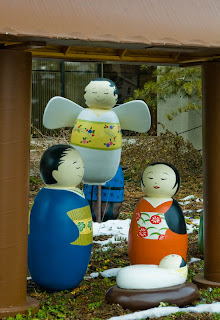
Here are my shots, right now at temple square they have some nativities from around the world, so I took a bunch of shots of this particular one. I think I probably took around twenty. Here are the five I like the best. Which one is better? I don't know it depends on what you like, but I'll tell you my favorite definitely wasn't the first shot I took, or the "walk up" shot. I'll also put my exposure values so you can keep getting used to what they are and what they do. I took these all in aperture priority mode and most of them were at an f/11. The one at f/8 I went lower to get a more shallow dof, usually you won't see that shallow of a dof, but I was using a longer lens, we will have to talk about how lenses affect dof later. Also, like I suggested in exposure, I left my ISO at its lowest setting. Since the lighting was pretty much the same, you'll notice all the settings are pretty much the same.

Setting POV Camera Composition


Composition: f/11 1/60 ISO 200

Setting POV Camera Composition


Composition: f/11 1/60 ISO 200

Setting POV Camera Composition


Composition: f/11 1/60 ISO 200


Setting POV Camera Composition


Composition: f/11 1/60 ISO 200


Setting POV Camera Composition


Composition: f/8 1/45 ISO 200


[read more]

Tips Cameras Lenses Photography

Okay, I realize that some of you don't have SLR (Single Lens Reflex) cameras, and some of you that do don't have lenses to change out anyway, well who cares I'm going to talk about lenses anyway. Even with a point and shoot understanding your lens could help out with your photography. Also, I don't really know of an assignment to give for this one, so it can be some nice reading as your finishing up your composition assignment. This is also really long, just a lot of reading, so you may want to read it sections at a time. Especially since there is probably some confusing stuff in here.

Sensor Size

Okay before we can start talking about aspects of a lens we need to understand a little bit about our sensors. When the light comes into the lens and hits the medium to save the data on you get a different view based on how big that medium is. In most digital cameras, in all until you get high end models, your sensor is smaller than a frame on a roll of film. What does this mean, well just think of it as your camera cropping off the edges of what you would see in a film camera. Your camera should have documented somewhere how much this is, it is known as the crop factor. My camera has a crop factor of 1.5. This was confusing to me at first, but let me give you an example. If I put a 50mm lens on my digital camera and took a picture, then I wanted to take the same picture with a film camera, in order to see the same area I would have to use a 75mm lens, because the 50mm lens would have a bigger area, I would have to keep zooming in until 75mm to get the same area/crop that I had with the 50mm on my digital camera. I know this is hard to understand by reading it, so here is a fun place to play with what I am talking about. This website is a pretty good third party lens company, they make lenses and make them work with lots of different brands of camera. In order to help you choose the lens you need they have this tool. You can change the zoom to the desired spot, and you can choose digital or 35mm (film camera) to see what that lens would do on that type of camera. Check it out and play with it here until you get the hang of what I'm talking about.

Focal Length

Focal length is the distance from your lens to the medium, in our cases a sensor. These can range anywhere from 10mm to 1600mm, some lenses can go even lower or higher than that. Usually there are three categories that all lenses are placed into. The first category, on the lowest end, are your wide angle lenses. We've all heard of wide angle lenses right? These are the ones that are so wide, in some cases, that the edges of the picture start curving. When this affect starts happening they are also referred to as fish-eye lenses, because that is kind of how a fish sees things. These wide angle lenses are anything that has a focal length lower than 50mm in a film camera, or on my camera anything lower than 33mm, because of that crop factor we understand so well now. Basically just take the film number and divide it by your crop factor, most crop factors are 1.6. The next area are your normal lenses. These focal lengths are what "they" (who are they?) say our normal eye sees. In film terms this is anything between 50mm and 55mm, so on my digital it is between 33mm and 37mm. The last category are telephoto lenses, this is anything larger than normal, so anything above a 55mm, or in my case a 37mm is considered a telephoto lens. These values based on some simple math using arcs and stuff, you remember geometry, right, give us the number of degrees, or angle of view, we can see all at once looking through the lens, lets go over some of these values now, I'll just touch on some of the more popular values.

Focal Length 35mm Degrees Digital Degrees
14mm 114 92
33mm 66 44
37mm 60 40
50mm 46 30
55mm 43 27
75mm 32 20
135mm 18 11

I think you get the picture. If you notice the digital 33 is similar to the 35mm 50, thats good because above I told you those are basically the same field of view, which is shown here in the fact that they see the same number of degrees. Another thing to notice here, if you want wide angle shots you have an advantage with film, because the 14mm value will let you see more. If you like to get up close and tight from far away, then digital has an advantage because the 135mm value is a tighter shot on the digital camera. Understanding these values can help you determine what focal lengths you need to do the kind of shots you like. Those of you that like shooting portraits, which I think are a lot of you, you want somewhere between a 50mm and 88mm focal length, this is an unwritten rule, that is normally considered a good length, because you can give the person a little space and get a pretty normal perspective, or even a more narrow perspective, which we like because it makes us look skinnier. If you took a shot of a person with a 10mm lens they would stretch really wide, and I'm sure they wouldn't be too happy about that.

Types of Lenses

There are three different types of lenses, fixed focal length, zoom lenses, and macro lenses.

Fixed focal length lenses are kind of what they sound like, they are fixed in focal length, so a fixed 50mm lens, can only shoot at 50mm. These are also known as "prime" lenses. An advantage to prime lenses is the manufacturer knows what focal length you are always using so they can optimize the glass (oh side note photographers often refer to lens as glass, hey I need to get some better glass, that is some nice glass) to get a sharper picture, and they can often get you a wider aperture because they don't have to worry about all the different focal lengths. Our fixed 50mm lens has a max aperture value, I say max meaning how wide it can go, of 1.4. The disadvantage is that you need lots of these to get a good range of focal lengths.

If it isn't fixed, its a zoom. A lot of people think a zoom is a lens that gets you really close, but as I said above those are called telephoto, zoom is any lens that adjusts the focal length. So a 10mm-17mm zoom is a wide angle lens, and a zoom at the same time. The disadvantage of a zoom is that they are usually heavier, they usually have a "sweet" spot, a place where the lens is best optimized for a sharp picture, and unless you shill out the big bucks your aperture value usually isn't as wide, and it changes based on what focal length you have set, more on this later.

The last type of lens is a macro. This is really a different topic, but I think we can talk about it here, because there are fixed, and zoom macros too. The difference with a macro lens though, is it can focus closer up, so you can get those shots of ladybugs that fill the entire frame. Every lens you have has a certain point that it won't focus anymore, once you get closer than that value, it is different for each lens, it won't ever be able to focus. Macros are just optimized to let you get a lot closer than a typical lens will let you, and it isn't an easy thing to do, so macro lenses are usually a lot more money than a lens with the same focal length and f-stop range.

Compositional Affects

As I just mentioned as you zoom in your aperture value changes on most zoom lenses. That seems a little odd, the f-stop value is just the size of the aperture right? Isn't the aperture still the same size as you zoom in and out? Well, f-stop isn't only based on the aperture size, it is actually based on the aperture size and the focal length. The f-stop is the focal length divided by the aperture diameter. My kit lens, the one that came with my camera, has a max f-stop of 3.5-5.6. Its focal length range is 18mm - 55mm. So at a focal length of 18mm with an f-stop of 3.5 my aperture is at 5mm. Setting the focal length to 55mm with an f-stop of 5.6 my aperture is at 10mm. I'm not sure why the aperture can get wider as the focal length gets longer, but it is usually just they cheaper way they can make the lens, thats just how it happens to work out because of how they made the lens. If the lens is a zoom and can always have an f-stop of 2.8, they have to work a little harder to get the aperture to adjust correctly to get at the right diameter at every focal length, so these are usually more expensive lenses.

If what I said above was confusing, sorry, but what does this mean to you? Well it means that there is something else affecting your dof. Yes, you always thought that setting your f-stop was giving you total control over dof, well you're wrong, although it is a big part of it, it isn't the only thing affecting it. The way the f-stop is controlling it, is because it is changing the diameter of your aperture, but as I just described above, zooming in gets you a wider diameter too given the same f-stop. So again, the wider the aperture the shallower your dof. So a 50mm lens at 3.5 is a smaller aperture diameter than a 100mm lens is at 3.5. So the 50mm has a bigger dof, since the aperture is smaller. This means as you zoom you are also getting a smaller dof. There is actually a third thing that controls dof, the distance from you to the subject. If you are really close to things then the planes that your objects sit on are exaggerated more, your eye works like this too, if you are looking at a mountain really far away, there isn't much difference between the rocks and the trees, but if you are hiking tree to tree you can tell which one is further away, so the closer you are to your subject, the more shallow the dof. So a simple recap, if you want a really shallow dof, you want your maximum f-stop value (the smallest number because they are fractions), you want to be zoomed in as much as you can, and you want to get as close as you can. This will give you your most shallow dof.

Accessories

Okay, lets talk about some things you can add to your lenses, for people with higher end point and shoots, like Julie, some of these will apply to you too.

We talked about macro lenses before, here are a couple of lower cost ways to try out macro photography, although they aren't as good as a nice macro lens, they do a pretty good job. The worst quality way to do macro photography is with magnifiers. These do just what you think they would, they magnify the image, making it look closer, kind of like a magnifying glass. The reason these aren't the best is because you now have more glass for the light to pass through, meaning you are probably losing quality, and less light goes through so you are losing some exposure too, but our cameras are smart enough to adjust for that. These can be bought at different values and you can stack as many as you would like to get more magnification. They screw into the end of your lens. Oh, anything that screws into your lens has to be the right size, and your camera should have the theta symbol and then the number, which is the diameter of your lens. My lenses are 49mm, 52mm, and 62mm. So when getting this stuff you need to know those values, that is the same value used to know what size lens cap you need if you ever lose yours. The next way to do macro photography is to get a reverse lens converter. One style of these you screw the converter onto your normal lens, usually a telephoto works the best, and then you screw another lens backwards onto the converter, this works like a magnifier as well. Again, you now have to worry about more glass. The last method, which is what I opted with, is a set of extension tubes. These go in between your lens and camera body and because they push your lens further away from the sensor you can get closer up and still focus. These are the best, next to macros, because you don't lose any quality as they are just hollow tubes. The biggest downside, you don't have much room for focusing, if you want to get further away, you have to start removing tubes, if you want to get closer you have to add tubes, but hey that is a small price to pay.

The next thing that you screw onto your lens are filters. Filters are what they sound like, they just filter the light, you can find a filter for just about anything you want. Some of the most common are UV filters, these block UV, but are mostly just used to protect your lens, because they don't really affect the shot much. Graduated filters, these are usually some color on top and by the time you get to the bottom they are clear. These are helpful for sunsets for example, if you have a red or orange graduated filter then the sky will get those darker sunset colors, while the bottom half of the shot will just be normal. ND(neutral density) filters are strictly just to filter out light, they are usually named based on how many stops of light they filter out. These are very helpful in getting those long shutter speeds for moving water in daylight. If our smallest aperture still makes our shutter speed a 125 that is too fast to get the flowing water, so we add a ND4 to take out 4 stops of light and now we are at a 4 shutter speed, which will give us that flow a lot better. The last type is one of my favorites called a polarizing filter. This takes out that polarizing affect you get when looking at water, where the light reflects off of it. If you have this filter, you can take away all the reflection and you can actually see right into the water. These actually work to take reflection off any non-metallic surface, like glass. They also have the added affect of making blues more blue, and greens more green.

Teleconverters are something that I wish I had to throw onto my telephoto zoom lens. These also go between your lens and body and change your focal length values of the lens. If you buy a 2x teleconverter and stick it on a 70mm-300mm lens, your lens is now a 140mm-600mm lens. These have the downside of more glass for the light to pass through, most people recommend not getting anything stronger than a 1.4x converter because they think any more and you lose too much quality.

The last extra, and most lenses come with these, are your lens hoods. Thes go onto the end of your lens and they block out any extra light that may hit your lens from outside of the view. This is commonly called sun flares, those little spots of light that just happen to get in pictures sometimes. If the lens hood is made right, you shouldn't get sun flares using your hood. Most photographers think you should always have your hood on, even in the dark, but I don't put them on too often because I am just too lazy to get them out, maybe I should work on that.

Conclusion

Sorry this was just a long boring post with no pictures. There is a lot to learn, so read it again in chunks until you understand it. If you don't have lenses or a camera that even has interchangeable lenses then this probably didn't help you much, but some of it should have. Again, this will just give you a nice break from assignments after that long composition assignment.

[read more]